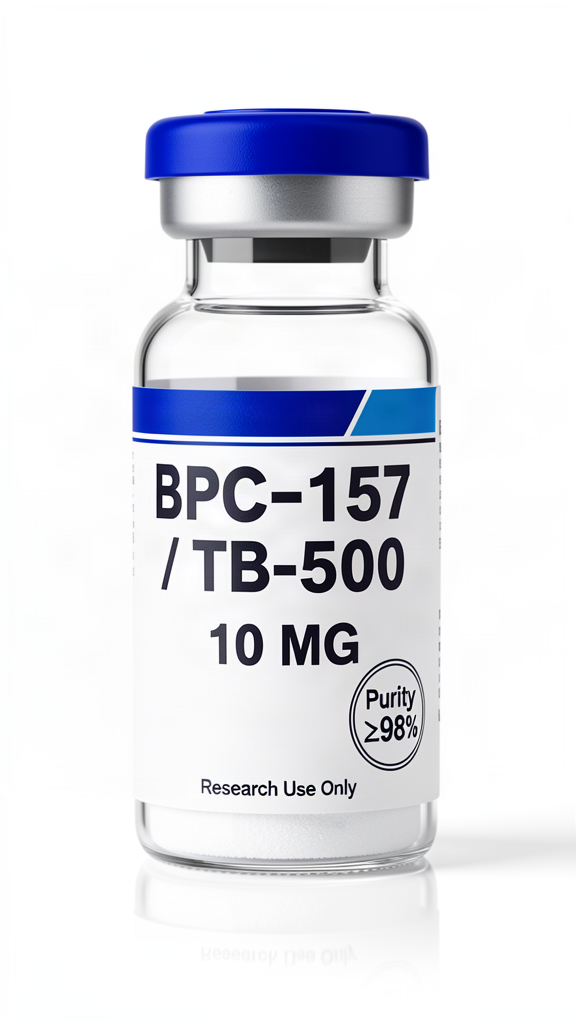
BPC-157 / TB-500 Blend
BPC-157 / TB-500 multi-peptide research blend · ≥98% (HPLC)
Two-peptide reference blend (BPC-157, TB-500) characterized for in-vitro study of overlapping tissue-repair and cytoskeletal-signaling pathways within a single analytical sample. For research use only.
More in Cytoprotection blend
KLOW Blend
Direct-lab pricing · up to 50% below comparable retail listings
Multi-peptide reference blend (GHK-Cu, BPC-157, TB-500, KPV) characterized for in-vitro study of cytoprotection- and matrix-associated signaling pathways. For research use only.
BPC-157
Direct-lab pricing · up to 50% below comparable retail listings
BPC-157 is a synthetic pentadecapeptide derived from a partial sequence of human gastric juice protein BPC, supplied as a characterized reference material for in-vitro tissue-repair and signaling research. Research Use Only.
TB-500
Direct-lab pricing · up to 50% below comparable retail listings
TB-500 is a synthetic acetylated heptapeptide corresponding to the actin-binding active-site region of thymosin beta-4, supplied as a characterized reference material for in-vitro cell-migration and cytoskeletal research. Research Use Only.
Research profile & documentation
- Why researchers study it
- Studied in vitro as a defined two-component reference material for investigating overlapping gastric-derived pentadecapeptide and actin-binding fragment signaling within a single analytical sample.
- Mechanism themes in research
- Nitric-oxide and growth-factor-receptor signaling (BPC-157)Actin-binding / cytoskeletal sequestration motifs (TB-500)Combined tissue-repair and cell-migration pathway literatureComparative multi-peptide reference standardization
- What the evidence does not establish
- Published references are in-vitro or pre-clinical and describe research context only. They do not establish safety, efficacy, or any outcome in humans or animals, and Get Peptides makes no such claims.
- Quality markers
- ≥98% (HPLC)MS identityLot COACold-chain
- What ships
- The sealed lot-controlled vial, a measured ampoule of bacteriostatic water, and a printed handling & reconstitution card — plus the per-lot COA. Everything to prepare it, in one box.
The BPC-157 / TB-500 Blend is a defined two-component research reference material combining a gastric-derived pentadecapeptide reference with a thymosin-beta-4 fragment reference. Because it is a blend, it has no single molecular identity, CAS number, or molecular weight; each component must be characterized separately.
Why a blend needs careful labeling
A two-component material is not one new molecule. The analytical identity of BPC-157 and TB-500 remains separate, as do their purity measurements, molecular masses, degradation profiles, and literature histories. A useful COA should identify both components and the total blend strength without implying that a single number describes both substances.
Component research contexts
BPC-157 is studied as a synthetic pentadecapeptide in cytoprotection, nitric-oxide, endothelial, and growth-factor-related model systems. TB-500 is commonly described as an N-acetylated thymosin-beta-4 fragment used in actin-binding and cytoskeletal research. These are distinct research questions. Combining the components in one sample does not prove synergy or a shared mechanism.
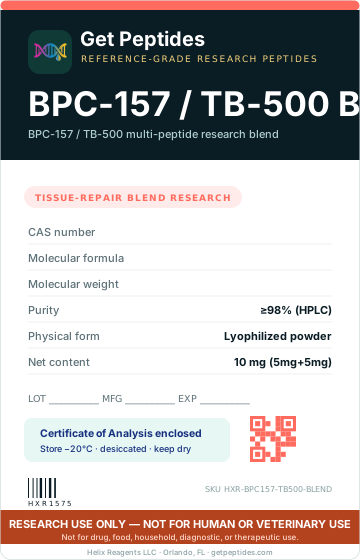
| Full name | BPC-157 / TB-500 multi-peptide research blend |
| Research theme | Cytoprotection blend |
| CAS number | |
| Molecular formula | |
| Molecular weight | |
| Purity | ≥98% (HPLC) |
| Physical form | Lyophilized powder |
| Storage | −20 °C, desiccated, protected from light |
Sequence
Reported research areas
- Combined nitric-oxide and actin-sequestration signaling studies
- Peptide analytical characterization and HPLC identity
- Comparative multi-peptide reference standards
- Tissue-repair and cell-migration pathway literature reviews
Credible sources
- PubChem — BPC-157 search
- PubChem — thymosin beta-4 / TB-500 search
- PubMed — BPC-157 and TB-500 research literature
COA with every lot
Each BPC-157 / TB-500 Blend lot is characterized by reversed-phase HPLC for purity and by mass spectrometry for identity, then documented in a per-lot Certificate of Analysis. Unique lot numbers tie the vial back to its synthesis batch and analytical data.
- RP-HPLC purity result (≥98% (HPLC))
- Mass-spectrometry identity confirmation
- Appearance, molecular weight, and storage
- Lot number and testing status
Specimen Certificate of Analysis
| Product | BPC-157 / TB-500 Blend (reference) |
| Lot | HXR-2406-115 |
| Purity (RP-HPLC) | 98%+ |
| Identity (MS) | Confirmed · |
| Appearance | Lyophilized powder |
| Storage | −20 °C, desiccated |
Representative document. Each lot has its own COA — these are quality documents, not medical claims.
Loading verified reviews…
Reviews come only from buyers we can match to a real order, and each is moderated before it appears. We never publish fabricated or incentivized reviews.